
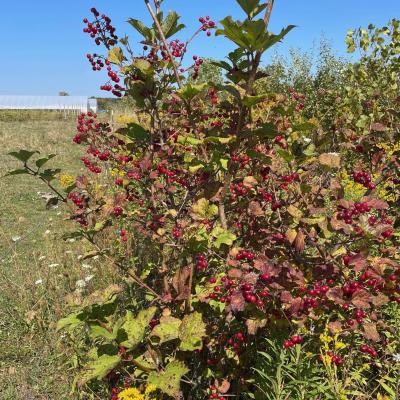
Highbush cranberry (Viburnum trilobum) growing in a 1 acre wet area of the farm that was transitioned to native wet-loving shrubs.
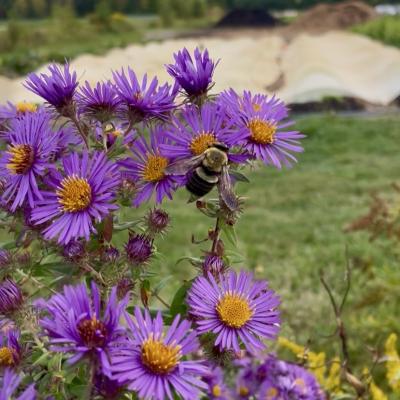
Pollinators visiting New England aster (Symphyotrichum novae-angliae) on the field edges. Symphyotrichum serve as host plants to dozens of moths including the Wavy-Lined Emerald.
How our farm turned marginal land into productive spaces
by Jill Lada, Community Engagement Specialist at the WCCD
Frog song season always wakes me up-both mentally with that oncoming spring energy, and literally as the swamp outside my bedroom window becomes a deafening drone of constant singing.
The singing is a good reminder that we are surrounded by an often-unseen abundance of life around us.
When my partner and I bought our land in 2012, it was a 40 acre bare field. The land has heavy clay soils and poor drainage, and so any low spot is not very productive since it is often too wet. Since we planned to farm vegetables on a smaller scale, we planted a lot of that marginal acreage into a mix of pastures and native plant buffers.
If you are not familiar, native plants are those that have evolved here for thousands of years. They have specialized in their own ways to grow in wet, dry, sun, shade, and fit into their environment accordingly. They have adapted strategies to reproduce, including masting (producing a synchronized abundance of seeds every few years) or co-evolving to be a food source for other organisms so that they move their seeds.
Indigenous people are a part of the evolution of these plants, using them for food, fiber, and shelter, and moving them as they move. They also manage their surroundings with fire for a multitude of reasons including: to keep the land more open for better hunting and traversing, reducing the risks of catastrophic fires, and to create openings in the canopy to let sun get to the understory fruit-producing plants. Many native plants in North America are adapted to fire and thrive with occasional controlled burns.
When Europeans came to the Americas, they brought with them plants and animals that did not evolve here-either on purpose or on accident. These days, this is still happening, just at a faster pace with modern modes of transportation. Some of these organisms thrive in their new environment and outcompete or harm the native species, and then they are considered invasive species.
Native plant life cycles are disrupted by an overcrowded environment. Combine that with loss of natural areas with land clearing for agriculture and development and we are left with fragmented and unhealthy forests, prairies, and wetlands. We are at risk of losing the diversity of life that evolved here.
But there is hope. The most remarkable thing about life is its resiliency. Only a few years after planting those native plant buffers on our farm, we saw an incredible difference in the abundance of life on the land. Small insects have returned in spectacular diversity. Birds, minks, foxes, snakes, frogs, and salamanders have all made our fields their home.
I love native plants because they tell a story of the earth. What rocks were here, how the glaciers moved, who lived here before, and what part of the ecosystem is their niche. Some have huge root systems to seek water and nutrients in poor or droughty soils. Others co-evolved to be the food source for giant sloths that no longer exist.
If I can ask of you one thing, it is to notice the life around you. Frog song, tiny native bees, and flowers blooming throughout the season. And if I can ask a second thing of you, plant some natives in your yard!
Please join us at the Native Plant Expo & Marketplace June 6th, 2026 where you can learn more and shop farmers market style for native plants.
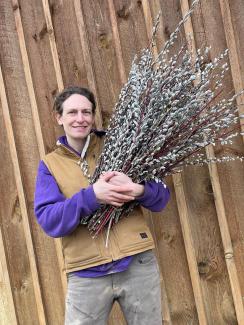
Jill Lada with pussy willow and red dogwood bunches harvested from the native plant buffers to sell at their farmstand.