
SepticSmart is a national effort to educate homeowners on proper use and care of septic systems.
Michigan has an estimated 1.3 million septic systems, serving roughly half of its population... and over 20% of them may be failing.
If not properly maintained, septic systems on residential, commercial, or municipal properties can harm the environment by contaminating groundwater or by releasing bacteria, viruses, nutrients, and toxic chemicals to surface waters.
Anthony Kendall, an assistant professor in the Department of Earth and Environmental Sciences at Michigan State University, identified “significant levels of fecal bacteria” in several of Michigan’s rivers, pointing to septic systems that are in some state of failure. “We actually look specifically at a DNA marker from a bacteria called B. theta that is exclusive to the human digestive system, so we know this isn’t fecal contamination from livestock operations or from nature.” (read more in Aja Witt's article)
Michigan is the only state lacking a statewide code regulating septic systems, though that may be changing.
Senator Sam Singh is leading current efforts to establish Michigan’s first comprehensive statewide septic code. Senator Sue Shink, who represents parts of Washtenaw County, is a cosponsor of the bill. Senate Bill 771 would direct the Michigan Department of Environment, Great Lakes, and Energy (EGLE) to develop uniform standards, create a statewide database of septic system locations, ages and conditions, implement a risk-based evaluation schedule and authorize trained third-party inspectors to assist local health departments.
Be Septic Smart
SepticSmart Week aims to encourage homeowners to properly use and maintain their systems. EGLE’s Onsite Wastewater Management Unit is encouraging homeowners to attend the National Onsite Wastewater Recycling Association (NOWRA) SepticSmart training. Dr. Sara Heger will be presenting a free webinar September 14 at 3 p.m. (EDT) to celebrate the start of SepticSmart Week.
Washtenaw County Residents can find records, educational resources, and financial assistance information on the: Washtenaw County Health Department website.
How is the WCCD getting involved?
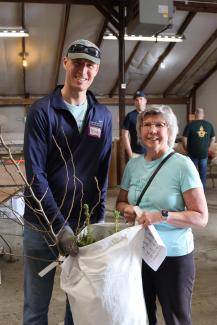
At the WCCD, Nick Machinski provides leadership technical expertise for all farmer programs, with a focus on accelerating the voluntary adoption of conservation practices in the Western Lake Erie Basin (WLEB) through new and existing approaches and tools. He provides technical assistance to producers interested in protecting their soil and improving water quality through federal, state and local programs.
The Washtenaw County Conservation District (WCCD) works with various partners to fund, develop, and implement watershed plans to protect and restore the health of our waterbodies in the Southeastern Michigan region. Water quality continues to be a top priority for residents and the WCCD.
WCCD staff are currently working on a project aiming to educate residents of the Ottawa-Stony North Watershed on how to reduce pollution risks from their septic systems. This watershed drains into Lake Erie, and reducing pollution in the watershed should reduce the risk of harmful algal blooms.
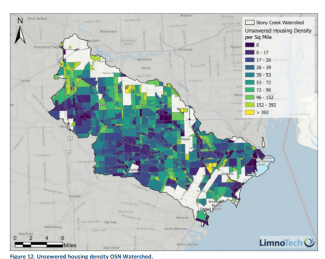
WCCD Staff are working to educate residents on how to maintain septic systems in the Ottawa-Stony North Watershed.