
Michigan Conservation Stewardship for Farmers Program Update
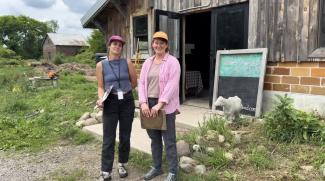
WCCD Staff Katy Beaven and Alex Cacciari on a site visit at Whitney Farmstead in Webster Township.
It’s been 5 months since enrollment opened for the Michigan Conservation Stewardship for Farmers Project (MCSFP) in early May. This innovative and unique program offers a total of over $3 million in financial incentives to 120 farmers to adopt new conservation practices as well as market-access support. Farmers of all scales and scopes (crops, livestock, dairy, and orchards) in Washtenaw, Wayne, Monroe, Lenawee and Hillsdale counties are encouraged to apply.
Since enrollment opened, the program has received applications from 63 farmers managing 15,667 acres in the 5-county region. Participant farms range from as small as 1 acre to as large as 2,400 acres. Crops represented include diverse vegetable market-farms, cut flowers, agroforestry and silvopasture operations, corn, soy, wheat, hay, orchards, certified organic, transitional and conventional. A diversity of livestock operations have applied as well, ranging from those raising mixed poultry to sheep, cattle, and pigs. As of writing, the program has distributed $115,000 to 19 contracted farmers, with another $527,000 committed and under contract. The average award per farm is $30,000.
The on-farm conservation practices that MCSFP pays for are as diverse as the farms it serves. MCSFP offers 35 different conservation practices, as defined by USDA-NRCS. That list includes familiar conservation practices like Cover Crops, No-Till, Pasture and Hay Planting, Mulching, and Integrated Pest Management. It also includes many lesser-known practices like Combustion System Improvement (electrification of tractors and tools), Energy Efficiency Improvement, Forest Farming, Silvopasture, and Woody Residue Treatment.
In addition to conservation practices, the program offers “marketing” practices that are intended to support market access for farmers. These include items like On-Farm Food Safety Infrastructure, Farm Brand and Story Development, Farmstand Marketing and Signage, and more.
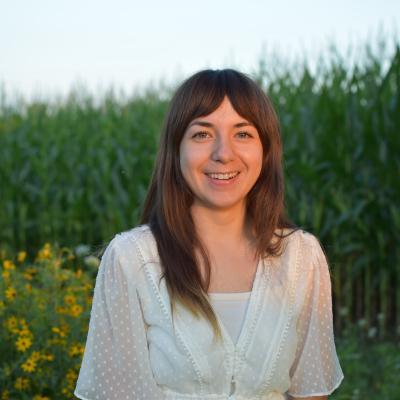
With such diverse farm systems and scales and the long list of practices it can pay for, the MCSFP team really prioritizes building trust and listening to farmers’ needs. The program is led by WCCD staff–Alex Cacciari, a longtime Washtenaw County vegetable farmer Katy Beaven, a locally-based ecological land management specialist, and Kristen Sutter, a conservation technician with NRCS experience.
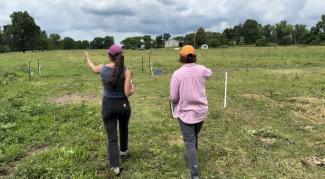
“It all starts with the site visit–meeting the farmer on their land, discussing risks and opportunities, and where the program can best meet their current needs for resilience and growth,” says Program Manager, Alex Cacciari. “That might look very different for different farms. Some folks need to address lacking facilities and equipment for crop harvest, processing and storage. Some farms might need more livestock watering options to support higher rotational grazing on the land and reduce soil compaction and manure runoff. Another farm might want to add tree crops for diversification and carbon sequestration. We try to view all these needs through a conservation and farm resilience lens, while creating the most impact with the grant dollars available.”
MCSFP is a USDA-funded initiative (formerly Climate Smart Farms) under the Advancing Markets for Producers Program. The program includes partnership with the Lenawee Conservation District, Monroe Conservation District, Keep Growing Detroit, and Michigan Association of Conservation Districts.
Questions about MCSFP?
Contact Washtenaw County Conservation District Staff
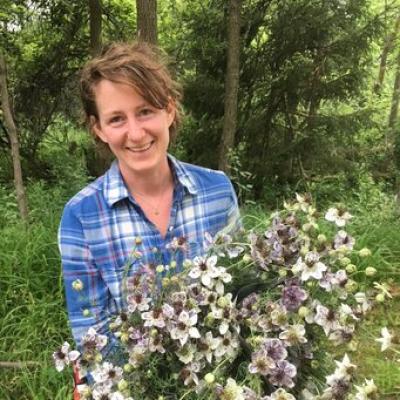
Alex Cacciari
she/her
Farmer Programs Specialist
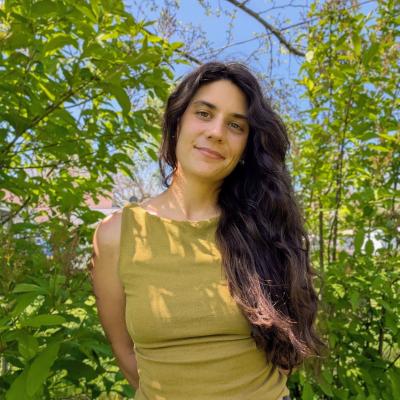
Katy Beaven
she/her
Senior Farmer Programs Technician
Kristen Sutter
she/her
Natural Resource Technician