
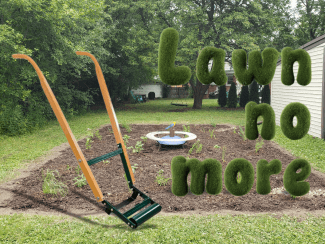
A local community member has successfully transformed a section of their lawn into a thriving, 24-foot by 16-foot rain garden, demonstrating an effective, hands-on solution to managing stormwater runoff and enhancing local ecology. The project, which used equipment borrowed from the Washtenaw Tool Bank Collective, a tool-lending program of the Conservation District, proved its mettle immediately by fully absorbing a 1.5-inch rainstorm without any overflow.
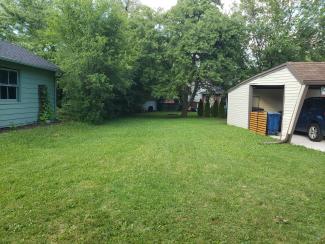
The ambitious project began by strategically rerouting drainage from the house to the adjacent lawn area, setting the stage for the rain garden’s future location.
The Sod Kicker: A Key to Success
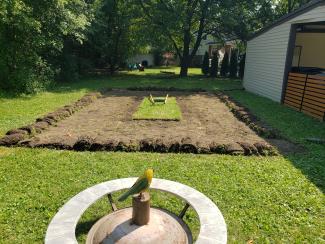
A critical first step in the conversion was efficiently removing the existing turf. For this, the resident turned to the Conservation District's tool lending program, utilizing a manual sod cutter to strip the top layer of grass across the entire 384 square foot surface area.
"The sod kicker made quick work of a job that would have been far more difficult and time-consuming with just a shovel," the community member noted.
Digging Deep and Preparing the Soil
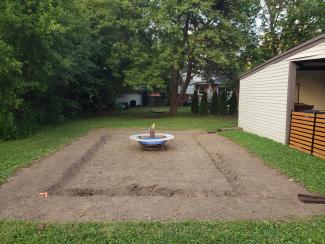
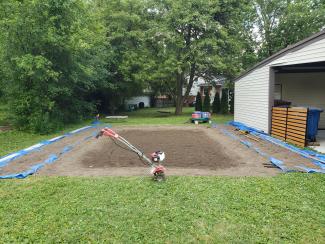
With the sod removed, the next phase involved outlining and excavating the deeper basin needed for the rain garden to function properly.
The deeper soil was prepared using a Mantis tiller to break up and loosen the earth, a vital step for ensuring good infiltration. The existing topmost soil was temporarily set aside on tarps and later returned to the garden's base after tilling, a smart way to retain valuable organic matter. Practicality was key in this phase, with simple items like Tupperware tubs in a wagon used to efficiently move soil to other parts of the yard.
Planting for Pollinators and Performance
After preparing the ground, the garden was ready for its signature feature: native, deep-rooted plants. In a move that supports local ecosystems and water quality, a 38-plant starter kit was purchased from the Conservation District's Spring Native Plant Sale in early June. The plants were transplanted in mid-August and were followed by a protective layer of mulch to conserve moisture and suppress weeds.
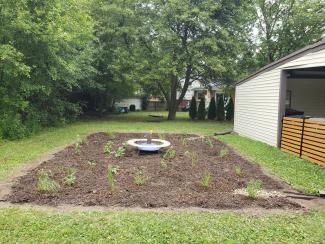
Soon after finishing planting, the garden was put to the test. Facing 1.5 inches of rain, the new garden performed as designed, filling to capacity but experiencing no overflow. By noon the following day, the collected rainwater had completely infiltrated into the soil.
This project serves as a model for how a motivated community member, combined with access to specialized tools, can make a significant, positive impact on local water management and environmental health.