
Goals for the project
The Farm at Trinity Health is an educational, non-profit farm. The goal of the Native Demonstration Prairie is to educate the community on native ecosystems while providing a repository for beneficial species that can positively influence the farm and hospital campus. The vision for the Native Prairie at the Farm at Trinity Health Ann Arbor is to create a space inside the farm’s deer fence where tick pressure is reduced so program participants and the public can engage with native plants in a safe and accessible environment. The prairie will also harbor beneficial native insects that will positively impact farm production through pollination and predation services.
Project overview & timeline
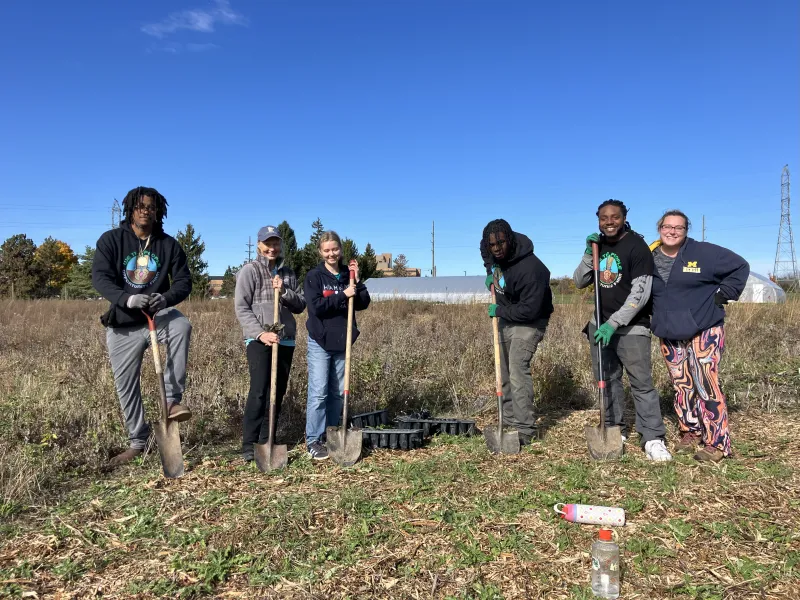
In fall of 2023, The Farm broadcast seeded the 1.4 acre site with seeds procured from the Michigan Wildflower Farm. The seedlings emerged in the spring of 2024. After a year of establishment that included one pass of high mowing just before the thistle went to seed, pathways were mowed and woodchipped. The WCCD grant provided the funds to install plug plantings throughout the site, which were planted in the fall of 2025. Planting plugs in addition to seeded varieties ensures that this area has excellent plant diversity and mature native plants for the community to interact with.
Now established, we plan to work with volunteers to continually manage, maintain, and diversify the prairie. Our educator has begun to include the prairie into her field trip curriculum and public members have been seen walking the pathways.
Over the next year, we plan to install additional signage, develop educational activities (i.e. scavenger hunts, journaling, drawing, plant prints, etc.), and organize tours for staff, neighbors, and community groups.
The Farm at Trinity Health's 2025 impact
-
2800 Volunteer Hours
Any successes or challenges with this project?
Successes: The broadcast seeding in 2023 was effective. Many good species have emerged including both grasses and forbs. The high mowing pass in the summer of 2025 as well as spot removal with a hand sickle just before the thistle seeded, reduced the population well. Our pathways are relatively accessible with deep woodchips. We invested in management support from Feral Flora which has helped ensure successful species emergence.
Challenges: Non-native thistle remains a problem. We’ll continue to manage and remove as needed.
What are plans for future maintenance and use?
The Farm maintains a robust volunteer base who are involved in most aspects of site maintenance and vegetable production, with over 2800 volunteer hours logged in 2025. Volunteers are recruited from groups like Wild Ones and the Sierra Club to support our native prairie maintenance efforts. Existing farm infrastructure like tractors, brush hogs, zero-point mowers, and hand tools, allow us to work effectively. We envision annual volunteer days managing invasives, adding enhancement plantings, and spreading native seed.
We look forward to expanding our 5th grade and special needs field trip curriculum to incorporate the prairie. The prairie will also become an integral part of our summer camp and community programming. The Farm hosts numerous workshops, walks, therapy sessions and events where the native prairie can be featured and enjoyed. Planned tours and additional signage will encourage public use and engagement.