
Rakes and Leaves
When I was in high school a parent had a brilliant idea to raise some money for a trip we were planning on taking with our school group. Rake leaves for $40 a yard, no questions asked and any amount of leaves. I probably raked leaves four straight Saturdays in a row that autumn, and the fundraiser was lackluster. Hundreds of bags of leaves, and we probably only raised a couple hundred dollars apiece.
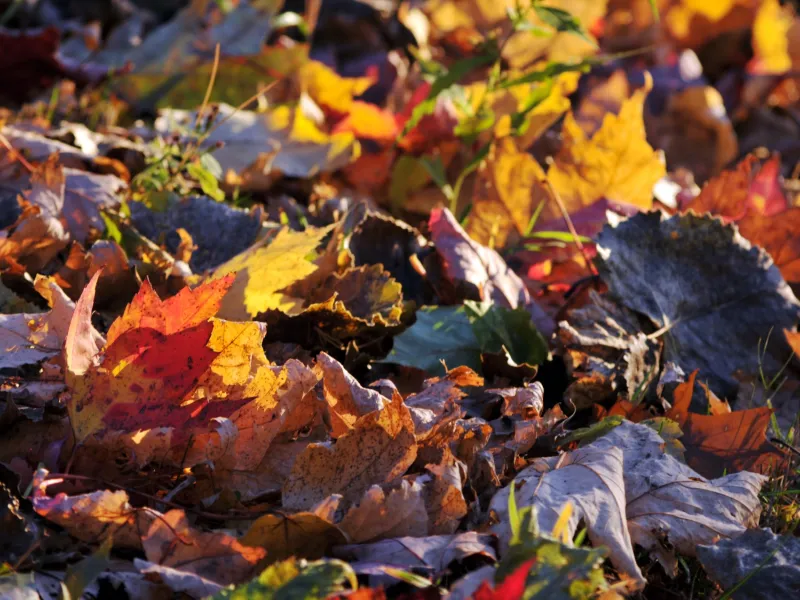
Fall is here and the question about whether or not to rake leaves will come up for many Washtenaw residents. Leaves can provide important nutrients for trees and soil microbes if they are allowed to decompose over the winter. Oak leaves and the leaves of many other tree species are particularly valuable for wildlife. Their relatively high tannin content means they break down slowly, providing important cover for overwintering insects and other small organisms. Not raking also saves you from the blisters I surely got from my long Saturdays spent raking in my youth.
There's Always Trade Offs
So, leaving your leaves in place is always a good thing, right? Not necessarily. While fallen leaves provide important benefits for soil health, wildlife, and nutrient cycling, they can also provide a place for some common tree diseases to overwinter.
Diseases such as anthracnose and other fungal leaf-spot diseases can survive in fallen leaves and become a source of infection the following year. In most cases, these diseases are primarily cosmetic and pose little threat to an otherwise healthy, established tree. However, when a tree is already experiencing other health stresses, reducing sources of recurring disease can be helpful.
Steps for Critical Habitat
One simple approach is to remove leaves that accumulate directly beneath a tree’s canopy, particularly when the tree has a history of fungal leaf diseases. Removing this leaf litter can help interrupt the disease cycle while still allowing you to leave leaves elsewhere on your property where they can benefit soil and wildlife.
Another approach is to take stock of how much leaf litter is actually accumulating in your yard. If you have a thick layer of leaves that is smothering your grass, it’s reasonable to remove some of them, roughly 50–70% is a good rule to go by. And don’t forget to look up! Those oak leaves have a way of falling on their own schedule.
If you have more leaves than you can leave on the ground, you don’t necessarily need to bag and haul them. Leaves can be mowed over several times to chop into smaller pieces. This allows the leaves to settle into your yard and return nutrients to the soil and eventually your trees. You might also consider adding your leaves to a yard waste pile or compost area. There they can break down over time and be added to your soil or garden later.
Rather than removing every leaf from your yard, consider leaving a portion of it undisturbed as a kind of pollinator reserve through the winter. Even if only 20% of your yard is covered in leaves, leaving that area alone, perhaps in a corner of the yard or against a fence, can provide valuable overwintering habitat while still keeping the rest of your lawn manageable.
It's Up To You!
Should we leave the leaves is a yard by yard question. The types of trees in your yard, and how you like to manage your landscape are the most important factors. So before you pay a group of kids $40 for their field trip fundraiser, think about the ecosystem around you!
This article was written by Matt DeJonge in October, 2026.

Matt DeJonge
Community Forester